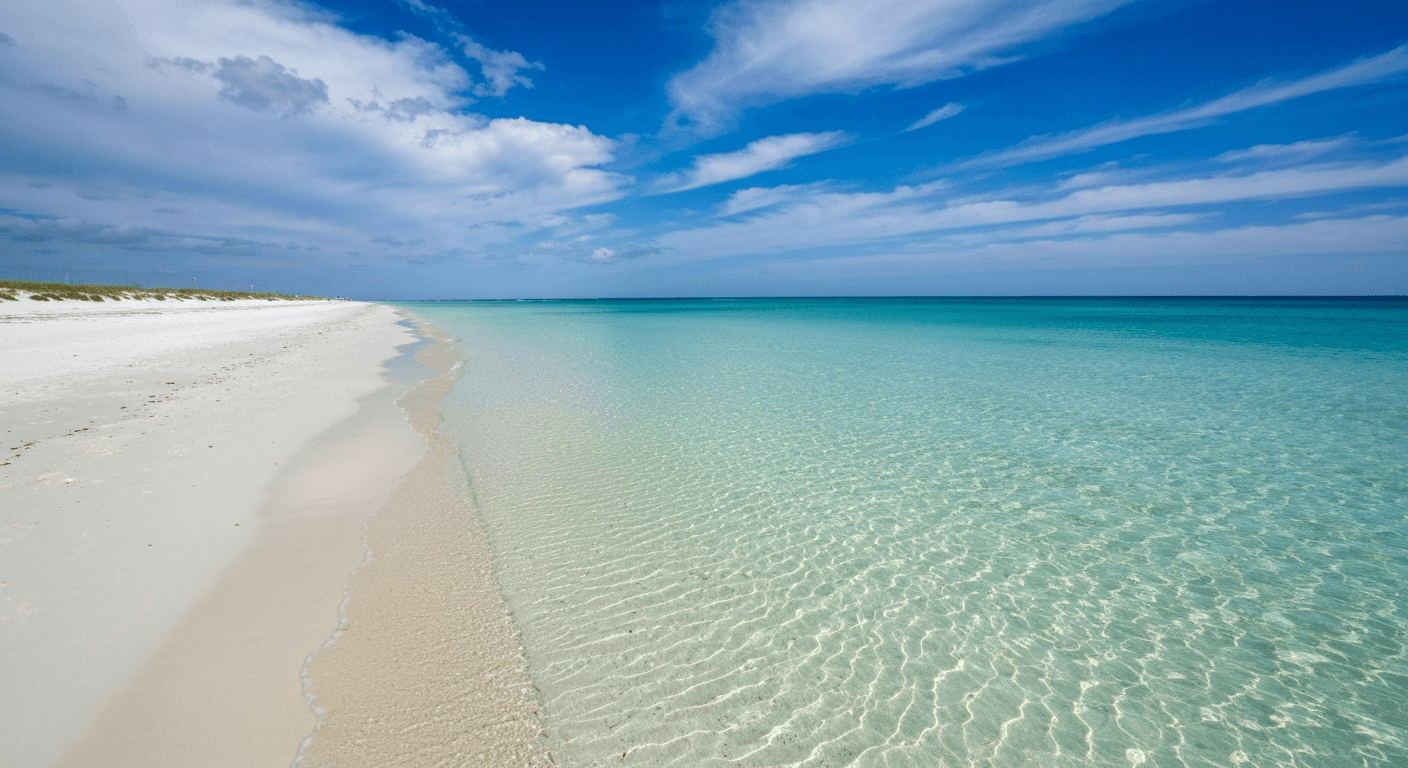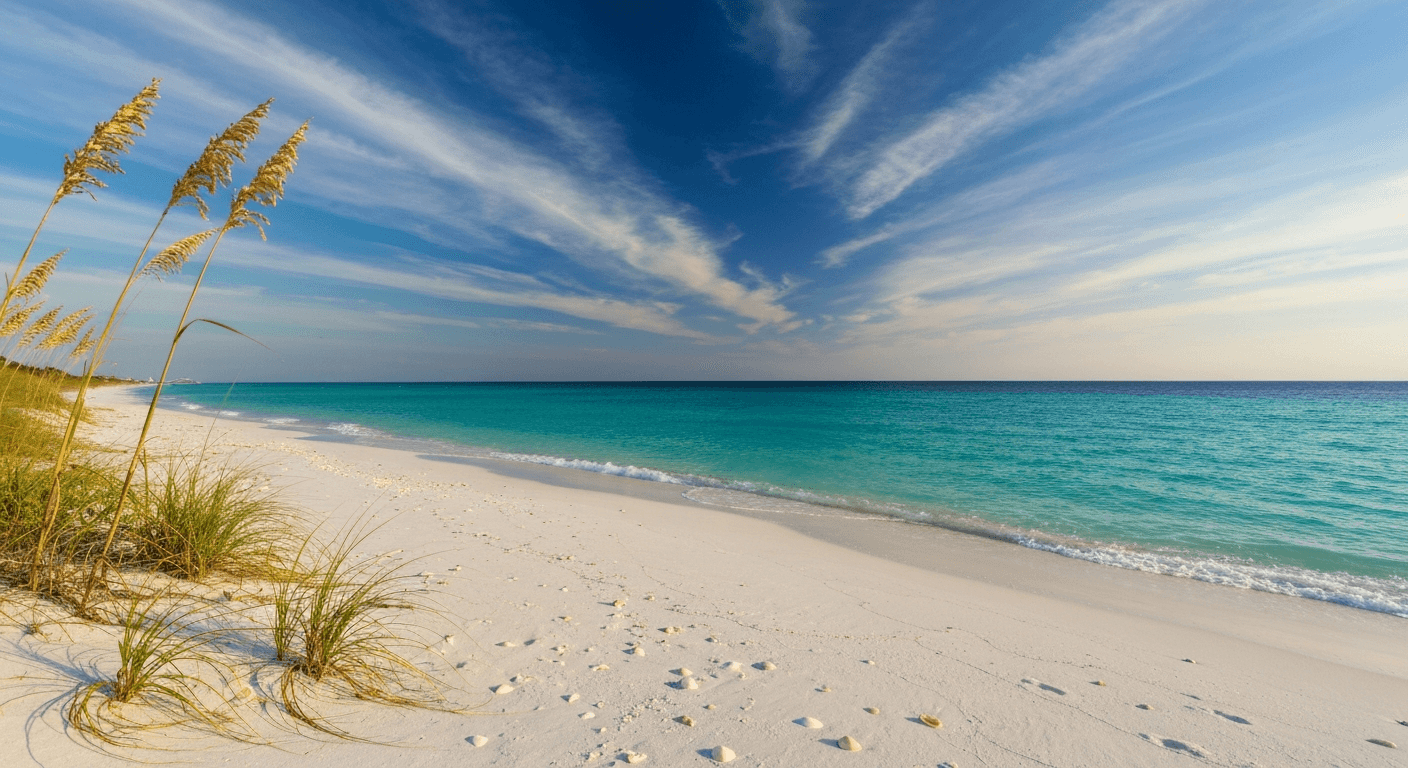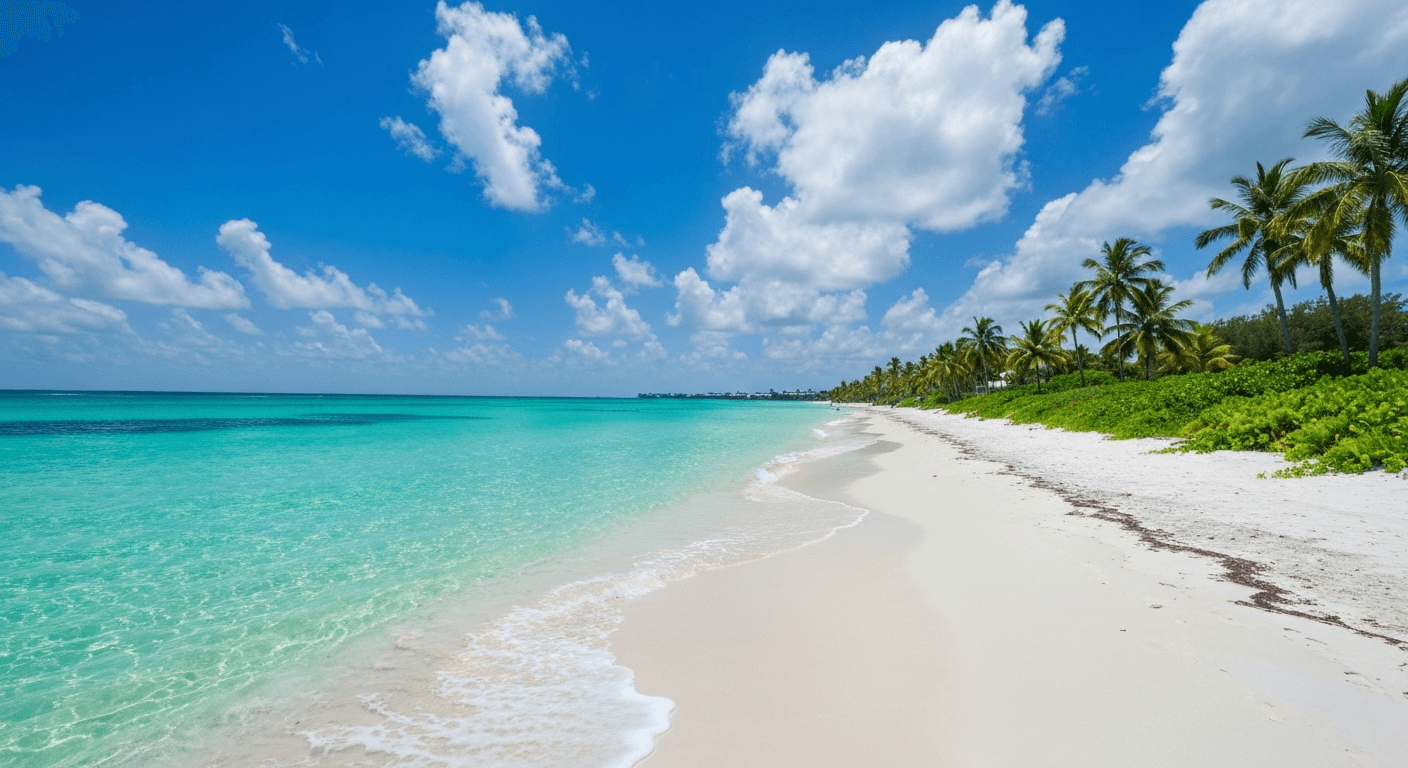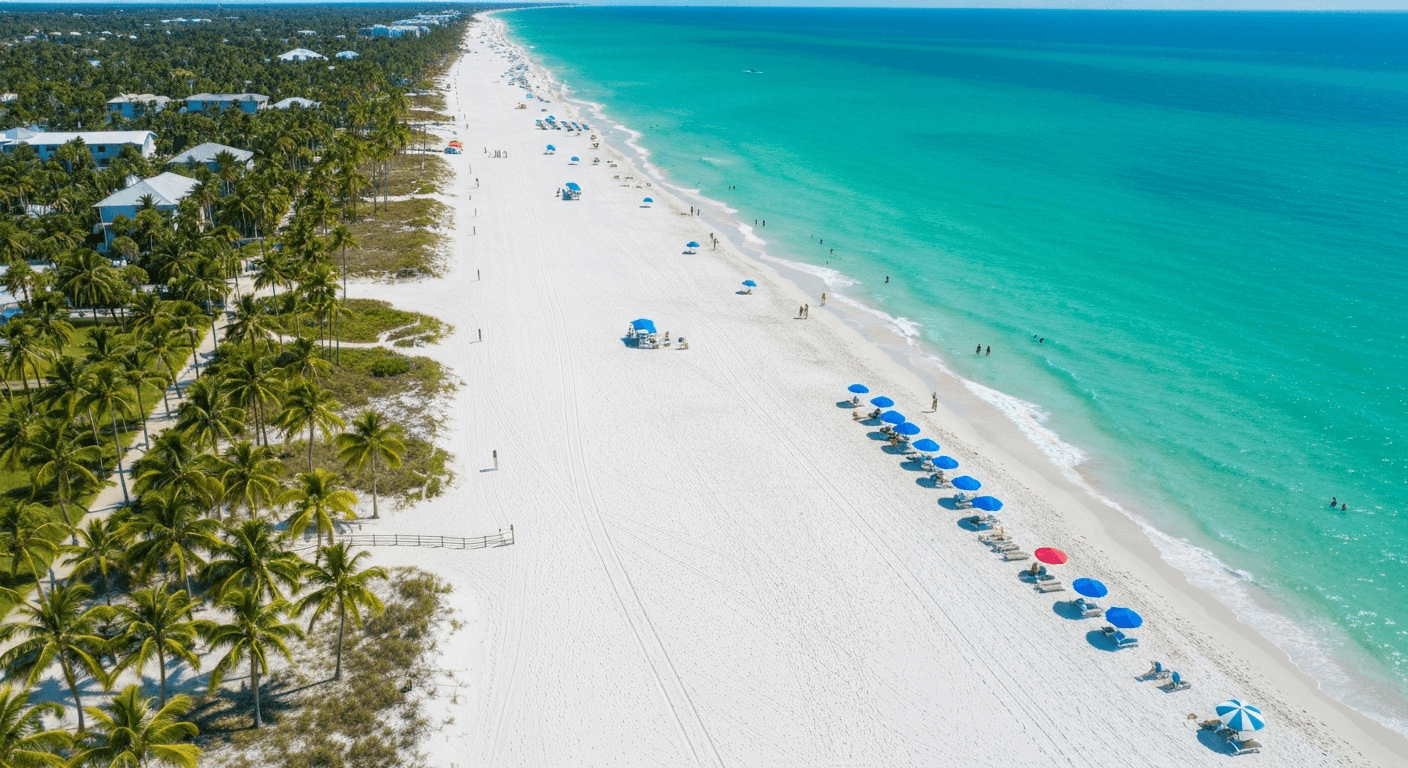
Siesta Key is home to what many consider the finest beach sand on the planet. The sand here is composed of 99% pure quartz crystal - carried south over millennia from the Appalachian Mountains - and it stays cool underfoot even in the blazing Florida summer heat. That remarkable quality, confirmed by a Harvard University geology study, helped Siesta Beach earn the #1 Beach in the United States ranking from TripAdvisor's Travelers' Choice Awards in 2025 and the title of "World's Finest, Whitest Sand" at the 1987 Great International Sand Challenge.
But Siesta Key is more than one famous beach. This eight-mile barrier island off the coast of Sarasota packs four distinct beach experiences into a compact stretch of Gulf shoreline - from the family-friendly amenities of Siesta Beach to the quiet kayaking waters of Turtle Beach, with a world-class snorkeling reef hidden in between. This guide covers every beach on the island, with honest details on parking, crowds, facilities, and the best times to claim your spot on the sand.
This article contains affiliate links. If you book through our links, we may earn a small commission at no extra cost to you. This helps support our local content.
Siesta Beach - The Main Attraction
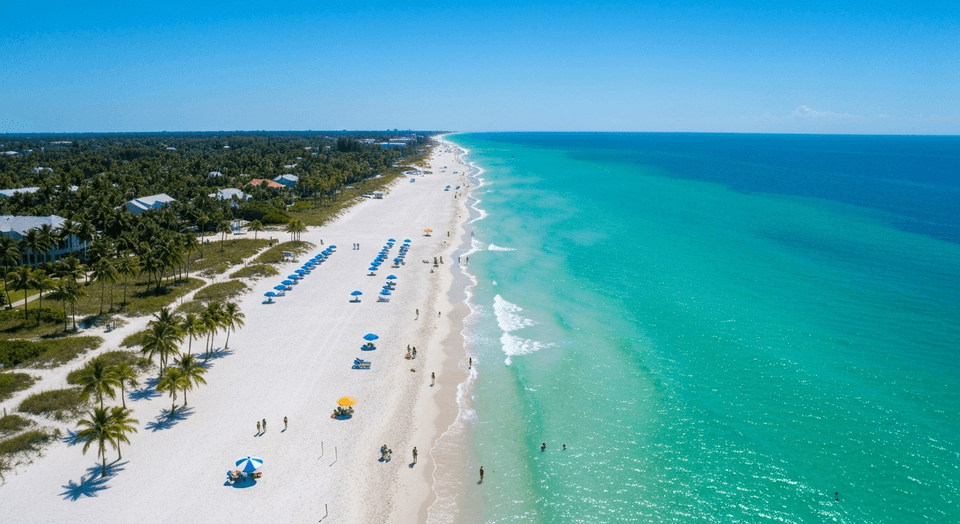
Siesta Beach is the flagship, the headliner, the beach that put this island on the international map. Located at 948 Beach Road, the main public beach stretches roughly a mile along the Gulf with an exceptionally wide, flat expanse of powder-white quartz sand that never feels cramped - even during peak snowbird season in February and March.
The sand deserves its own paragraph. Unlike most Florida beaches where the sand is made of crushed shells and coral (and burns your feet by noon), Siesta Key's quartz crystal sand reflects rather than absorbs heat. You can walk barefoot across this beach at 2 PM in July and feel nothing but cool softness. The grains are so fine they feel like powdered sugar between your toes, and they rinse clean with barely a brush - no sticky residue, no clumping.
The water is calm, clear, and shallow for a long way out, making this one of the safest swimming beaches on the Gulf Coast for families with young children. A gentle slope means kids can wade and splash in ankle-deep water for dozens of yards before it gets deep enough to swim.
Facilities at Siesta Beach are outstanding:
- 4 staffed lifeguard stations (on duty 10 AM – 5 PM daily, year-round)
- Large covered pavilion with picnic tables and grills
- Two concession stands with food, drinks, and beach gear rentals
- Clean restrooms and outdoor showers
- Playground and open-field area
- Beach volleyball courts, lighted tennis courts, and pickleball courts
- ADA-accessible boardwalk and free beach wheelchairs (sign out at the concession stand)
- Bike racks throughout the parking area
Parking: Siesta Beach offers 976 free parking spaces - no meters, no time limits. That said, on winter weekends and holidays, the lot fills before 10 AM. If you arrive after that, circle patiently or use the free Siesta Key Breeze trolley, which runs daily from 8 AM to 10 PM and stops right at the beach.
Insider tip: Walk south past the volleyball courts and the crowds thin dramatically within five minutes. Most visitors cluster near the main pavilion and concession area. The beach stretches far enough that you can always find open sand if you are willing to walk.
- Address: 948 Beach Rd, Siesta Key, FL 34242
- Parking: Free - 976 spaces (fills early in season)
- Best for: Families, swimming, sunset watching, first-time visitors
The Sunday Drum Circle - A Siesta Key Institution
Every Sunday evening, roughly an hour before sunset, the south end of Siesta Beach transforms into one of the most unique cultural experiences in Southwest Florida. The Siesta Key Drum Circle draws hundreds of locals and visitors who gather in a loose ring on the sand to play percussion instruments, dance, hula hoop, blow bubbles, and celebrate the sunset together.
The drum circle has been a Siesta Key tradition for decades. You do not need to bring an instrument - organizers often set out spare drums, shakers, and props for anyone to use. Dancers spin inside the circle while spectators set up beach chairs along the perimeter. The atmosphere is joyful, eccentric, and completely welcoming to families, couples, and solo travelers alike. There is no admission fee.
Practical tips for the drum circle:
- Arrive at least 30–45 minutes before sunset to find parking and claim a good viewing spot
- The gathering forms on the beach to the left of the main concession stands (south end)
- Bring a beach chair or blanket - the show lasts well past sunset
- Respect the drummers: enter the circle only to dance, keep drinks outside the ring, and give performers space
- Parking fills fast on Sunday evenings - the Breeze trolley is your best bet during peak season
The drum circle runs year-round, every Sunday, rain or shine. Sunset times shift with the seasons - check the forecast and plan to arrive accordingly. If you are visiting Siesta Key on a Sunday, do not miss this. It is one of those experiences that does not translate in photos; you have to feel the rhythm in person.
Looking for more things to do on the island? Check out our complete things to do in Siesta Key guide for dining, shopping, water sports, and nightlife.
Book a beachfront hotel or vacation rental steps from the sand. The closer you stay, the easier it is to beat the parking rush.
Find Siesta Key Hotels →Crescent Beach and Point of Rocks - The Hidden Gems
Crescent Beach shares the exact same legendary quartz sand as the main Siesta Beach - it is technically the same continuous shoreline - but with a fraction of the crowds. Starting south of the main beach area and stretching down toward Turtle Beach, Crescent Beach rewards anyone willing to walk an extra ten to fifteen minutes with significantly more space, quieter surroundings, and one of the best snorkeling spots on the entire Gulf Coast.
Crescent Beach
Crescent Beach is the stretch of sand that locals prefer. There are no concession stands, no lifeguards, no volleyball courts - just pristine white sand, turquoise water, and the sound of gentle Gulf waves. The trade-off for that tranquility is minimal facilities. Public access is available through Beach Access points 10, 11, 12, and 13 along Midnight Pass Road, all open 24 hours for pedestrian access.
Parking at Crescent Beach is extremely limited. The small lot at Beach Access 12 (6490 Midnight Pass Road) holds roughly 20 vehicles, and the spots at Access 13 are similarly scarce. Your best strategy is to park at the main Siesta Beach lot and walk south along the shoreline - it takes about 15 minutes to reach Crescent Beach and another 10 to reach Point of Rocks.
- Address: Along Midnight Pass Rd, Siesta Key, FL 34242
- Parking: Very limited - approximately 20 spaces at Beach Access 12
- Lifeguards: No
- Facilities: Beach access paths only - no restrooms, showers, or concessions
- Best for: Solitude, couples, experienced beach-goers, shelling
Point of Rocks - Siesta Key's Best Snorkeling
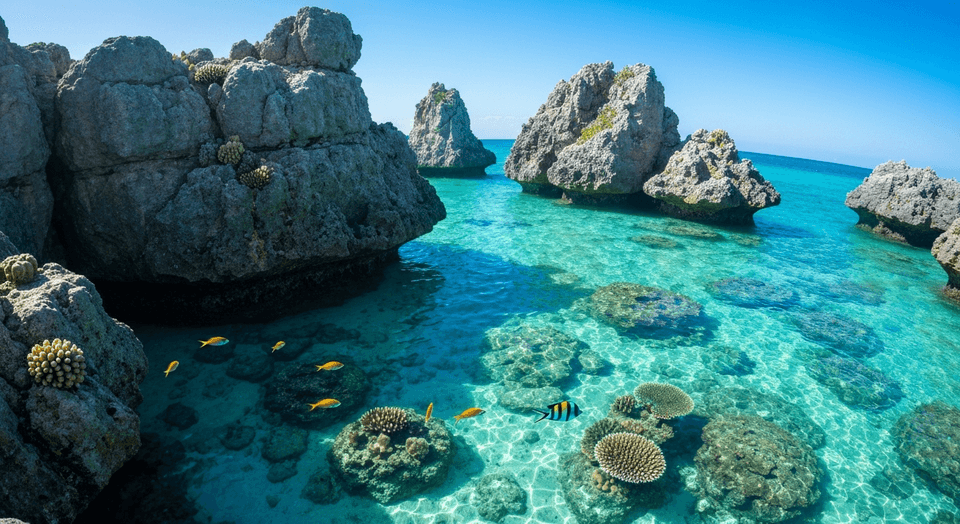
At the southern tip of Crescent Beach, a natural limestone rock formation juts into the Gulf, creating an underwater world that surprises first-time visitors. Point of Rocks is the premier snorkeling destination on Siesta Key, and arguably the best shore-accessible snorkeling spot on Florida's west coast.
The rocks create tide pools and submerged formations covered in algae, coral, and colorful marine plants. Bring a mask and fins and you will see tropical fish including snook, snapper, and sheepshead, along with crabs, starfish, sea urchins, small rays, and occasionally nurse sharks. During warmer months, manatees sometimes drift through the area.
Tips for snorkeling Point of Rocks:
- Best time of year: June through September offers the warmest water and best visibility
- Best time of day: Early morning (8–10 AM), before wind picks up and stirs the bottom
- Tide matters: Snorkel at high tide or as the tide is coming in. At low tide, you will be wading through sharp, slippery limestone with barely enough water to float
- Bring water shoes - the rocks are rough and can cut bare feet
- Essential gear: Mask, snorkel, fins. A wetsuit is helpful in winter months (water drops into the low 60s)
- Safety: Avoid snorkeling during red tide events or after heavy rain, which reduces visibility significantly
Access Point of Rocks from Beach Access 12 or 13 on Midnight Pass Road, then walk south along the beach until you reach the rock formations. Morning arrival gives you the best chance at snagging one of the limited parking spots.
Turtle Beach - The Quiet Southern Shore
Turtle Beach sits at the southern tip of Siesta Key, and it delivers a completely different experience from the polished, amenity-rich main beach to the north. Named for the sea turtles that nest along its shores from May through October, this is the beach for visitors who want a low-key, nature-focused day on the sand.
The sand here is noticeably different from Siesta Beach. Instead of the pure quartz crystal that defines the northern shoreline, Turtle Beach features a coarser mix of sand and shell fragments - still pleasant, but with a crunchier texture and a slightly golden hue. The water is also different: the shoreline drops off more steeply, currents can be stronger, and the Gulf bottom is rockier in spots. This is not the best beach for toddlers or weak swimmers, but it is excellent for adults who want to wade, fish, or launch a kayak.
What makes Turtle Beach special:
- Boat ramp and kayak launch: A public boat ramp provides easy access to Little Sarasota Bay and the Intracoastal Waterway, making this a popular spot for kayakers, canoers, and paddleboarders
- Sea turtle nesting: During nesting season (May–October), marked nests line the upper beach. Volunteer monitors patrol the area, and visitors are asked to stay clear of marked zones and avoid using flashlights at night
- Fishing: The rocky shoreline and deeper water attract anglers casting from shore. Snook, redfish, and sheepshead are common catches
- Campground: The Turtle Beach Campground, operated by Sarasota County, offers tent and RV sites directly adjacent to the beach - one of the few beachside camping options in the region
Facilities at Turtle Beach are solid for a quieter beach:
- Approximately 200 free parking spaces
- Restrooms and outdoor showers
- Large covered picnic shelter with grills
- Boat ramp with dock access
- No lifeguards
- No concession stands
Turtle Beach rarely reaches capacity, even during peak season. If every other beach on Siesta Key is packed, Turtle Beach almost always has open spots.
- Address: 9409 Midnight Pass Rd, Siesta Key, FL 34242
- Parking: Free - approximately 200 spaces
- Best for: Kayaking, fishing, camping, sea turtle watching, avoiding crowds
For a broader look at Sarasota-area shoreline, including Lido Beach, Venice Beach, and Caspersen Beach, see our guide to the best beaches in Sarasota.
Best Times to Visit and Crowd Tips
Knowing when to go - and when to avoid - can make the difference between a perfect beach day and a frustrating hunt for parking. Here is what to expect throughout the year.
Peak Season (January – April)
Snowbird season brings the biggest crowds. Siesta Beach's main parking lot fills before 10 AM on most weekends and can fill by 11 AM on busy weekdays during February and March. Spring break (mid-March through mid-April) adds another surge. If you are visiting during peak season:
- Arrive before 9 AM to guarantee a parking spot at Siesta Beach
- Use the free Siesta Key Breeze trolley - it runs from Siesta Village and stops throughout the island, including the main beach. Service runs 8 AM to 10 PM daily
- Try Turtle Beach instead - it almost never fills to capacity, even on the busiest days
- Weekdays are dramatically less crowded than weekends, even in February
Shoulder Season (May, November, December)
The sweet spot for locals. Water temperatures are warm enough for comfortable swimming (mid-70s to low 80s), crowds have thinned considerably, and parking is easy to find all day. May is particularly excellent - summer weather without summer tourist volume.
Summer (June – September)
Water temperatures peak in the mid-80s and snorkeling conditions at Point of Rocks are at their best. Daily afternoon thunderstorms are common (usually 2–4 PM), but mornings are typically clear and gorgeous. Humidity is high, but Gulf breezes keep the beach more comfortable than inland areas. Summer weekends still get busy, but nothing like peak season.
Water Temperature by Season
- Winter (Dec–Feb): 62–68°F - refreshing for some, too cold for others. Wetsuits recommended for snorkeling
- Spring (Mar–May): 72–82°F - comfortable for swimming by mid-March
- Summer (Jun–Sep): 82–87°F - bathtub warm, perfect for extended water time
- Fall (Oct–Nov): 74–80°F - still very swimmable, with smaller crowds
Getting Around Siesta Key
Siesta Key Breeze Trolley (Free)
The Siesta Key Breeze is a free trolley service that runs a loop from Siesta Village through the residential areas and down to the southern end of the island. It operates every day from 8 AM to 10 PM with stops at Siesta Beach, along Midnight Pass Road (near Crescent Beach access points), and near Turtle Beach.
This is genuinely the best way to reach the beach during peak season. Park for free in Siesta Village, grab breakfast at one of the cafes, then hop the trolley to the beach. On the way back, stop in the village for dinner and drinks. No parking stress, no circling the lot.
Driving and Parking Summary
| Beach | Parking Spaces | Cost | Fills By (Peak Season) |
|---|---|---|---|
| Siesta Beach | 976 | Free | 9–10 AM weekends |
| Crescent Beach (Access 12) | ~20 | Free | 9 AM |
| Turtle Beach | ~200 | Free | Rarely fills |
All Sarasota County beach parking lots are open 6 AM to midnight. No overnight parking is permitted.
Biking
Siesta Key is flat and compact, making it ideal for biking. Several rental shops in Siesta Village offer daily and weekly bike rentals. A bike lets you easily hop between Siesta Village, the main beach, and Crescent Beach without dealing with parking at all.
Kayak tours, sunset cruises, dolphin watching, and snorkeling excursions launch daily from Siesta Key and nearby Sarasota.
Browse Siesta Key Tours & Activities →What to Bring to Siesta Key Beaches
A few items that will make your beach day significantly better:
- Reef-safe sunscreen - You will burn faster than you think on white quartz sand, which reflects UV light back at you from below. Reapply every 90 minutes
- Polarized sunglasses - The white sand is blindingly bright on sunny days. Polarized lenses cut the glare dramatically
- A shade solution - Bring a beach umbrella, pop-up tent, or canopy. While the main beach has a covered pavilion, it fills quickly. Crescent Beach and Turtle Beach have no shade structures at all
- Water shoes - Essential for Point of Rocks snorkeling and helpful at Turtle Beach, where shell fragments and rocks can be sharp
- Snorkel gear - If you plan to visit Point of Rocks, bring your own mask and fins. No rental shops are located directly at the beach access points (gear is available in Siesta Village)
- Cash - Concession stands at Siesta Beach accept cards, but the Breeze trolley is free and village meters take coins and cards
- A light layer - Gulf breezes pick up in the afternoon, and winter evenings can drop into the 60s quickly after sunset, especially if you stay for the drum circle
If you are planning a multi-day visit, check out our guide to the best hotels in Siesta Key for places to stay within walking distance of the beach.
Beach Safety and Rules
Siesta Key's beaches are among the safest in Florida, but a few rules and precautions are worth knowing:
- Lifeguards are on duty at Siesta Beach only, from 10 AM to 5 PM daily. Crescent Beach and Turtle Beach are unguarded
- Rip currents are uncommon but can occur after storms or during strong offshore winds. If caught in a current, swim parallel to shore - never fight it directly
- Red tide (Karenia brevis algae blooms) can affect Gulf beaches unpredictably, causing respiratory irritation and fish kills. Check the Mote Marine Laboratory beach conditions report before heading out during fall months when blooms are most common
- Sea turtle nesting season (May–October): Avoid disturbing marked nests, fill in any holes you dig before leaving, and do not use white lights or flashlights on the beach at night - they disorient hatchlings
- No alcohol on Sarasota County beaches
- No glass containers on any beach
- Dogs are not permitted on Siesta Beach or Crescent Beach. Turtle Beach allows leashed dogs in designated areas only
- Fires and fireworks are prohibited
For more Sarasota-area activities beyond the beach, explore our things to do in Sarasota guide covering restaurants, attractions, and day trips.
From beachfront resorts to cozy island rentals, find the perfect place to stay on Siesta Key.
Find Siesta Key Hotels →Frequently Asked Questions
Why is Siesta Key sand so white and cool?
Siesta Key's sand is composed of 99% pure quartz crystal, originating from the Appalachian Mountains and transported south over thousands of years by ancient rivers. Unlike shell-based sand found on most Florida beaches, quartz does not absorb heat - it reflects it. This means the sand stays cool underfoot even on the hottest summer days. A Harvard University geology study confirmed the sand's composition, and in 1987 Siesta Key won the Great International Sand Challenge for the "World's Finest, Whitest Sand."
Is parking free at Siesta Key beaches?
Yes, all public beach parking on Siesta Key is completely free with no meters and no time limits. Siesta Beach has 976 spaces, Turtle Beach has approximately 200, and Crescent Beach access points have about 20 spaces each. The catch is that during peak season (January through April), the main Siesta Beach lot fills before 10 AM on weekends. Arrive early, use the free Siesta Key Breeze trolley, or head to Turtle Beach where parking is rarely an issue.
When is the best time to visit Siesta Key beaches?
For the best combination of good weather, warm water, and manageable crowds, visit in May or October through early November. Water temperatures are comfortable for swimming (mid-70s to low 80s), parking is easy to find, and you avoid both the winter snowbird rush and the summer afternoon thunderstorms. If you want the warmest water and best snorkeling at Point of Rocks, June through September is ideal - just plan for afternoon rain showers.
Is Point of Rocks good for beginner snorkelers?
Point of Rocks is accessible for beginners but requires some awareness. Snorkel at high tide when water depth reaches four to six feet near the rocks - at low tide, the water is too shallow and the limestone can be slippery and sharp. Wear water shoes, bring properly fitting gear, and go in the morning when visibility is best and currents are calmest. There are no lifeguards at Point of Rocks, so beginners should go with a partner and stay close to shore.
What is the Siesta Key drum circle?
The Siesta Key Drum Circle is a free, community-led gathering that takes place every Sunday evening on the south end of Siesta Beach, about an hour before sunset. Dozens of percussionists play drums, bongos, and shakers while dancers, hula hoopers, and spectators form a circle on the sand. The event runs year-round and has been a beloved Siesta Key tradition for decades. No tickets or reservations needed - just show up, grab a spot, and enjoy the sunset soundtrack.