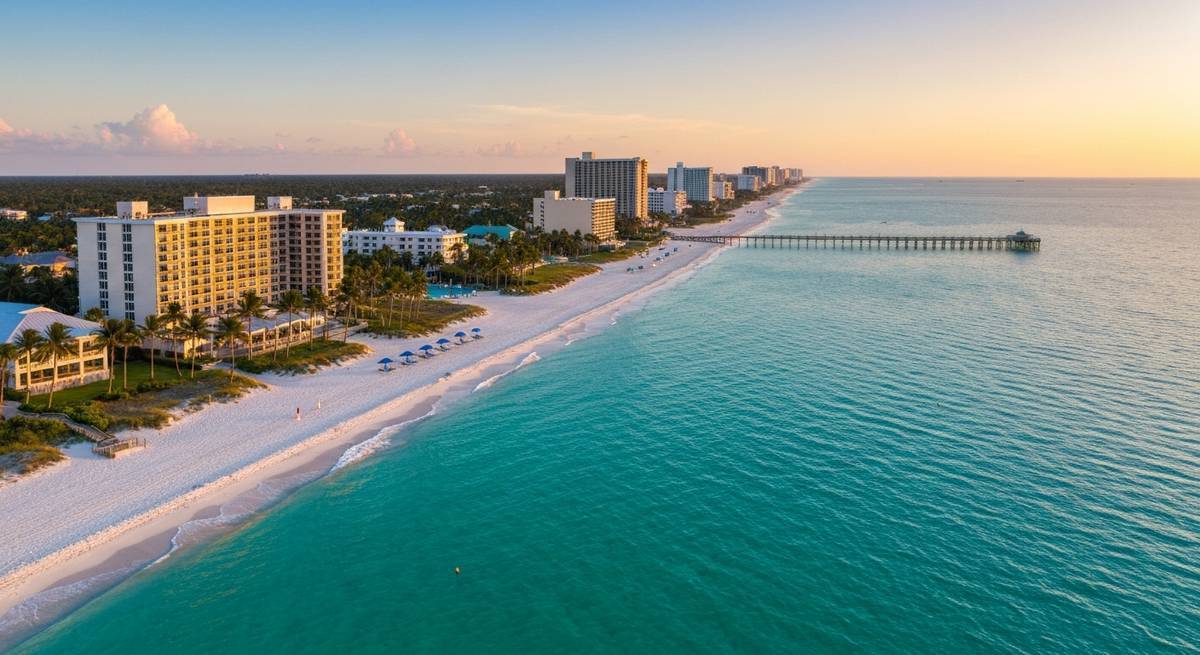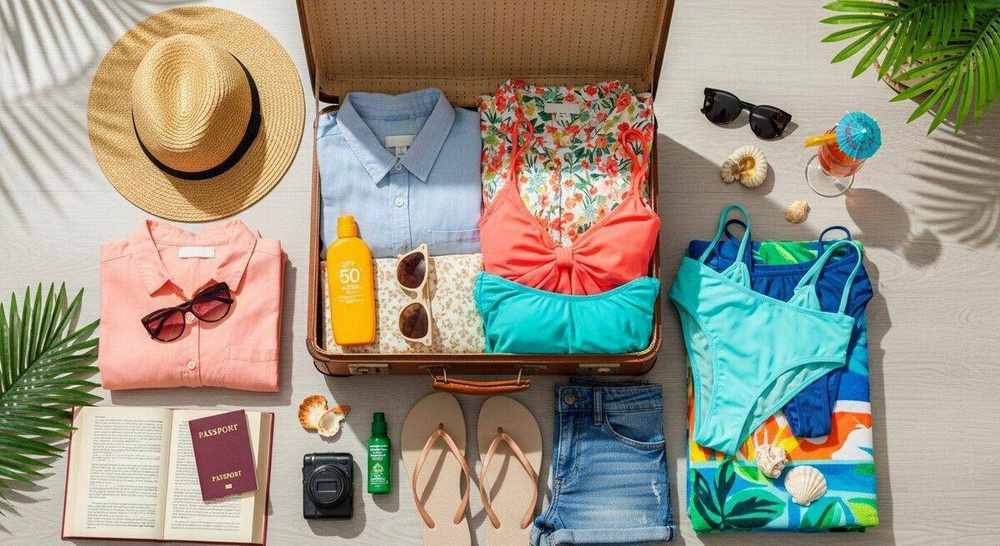
A Southwest Florida beach day needs less gear than most online lists suggest. Bring sun protection, more drinking water than you expect, secure shade where allowed, a towel, phone protection and footwear matched to the beach. Add shelling, child or mobility gear only when the day's plan requires it.
The core checklist
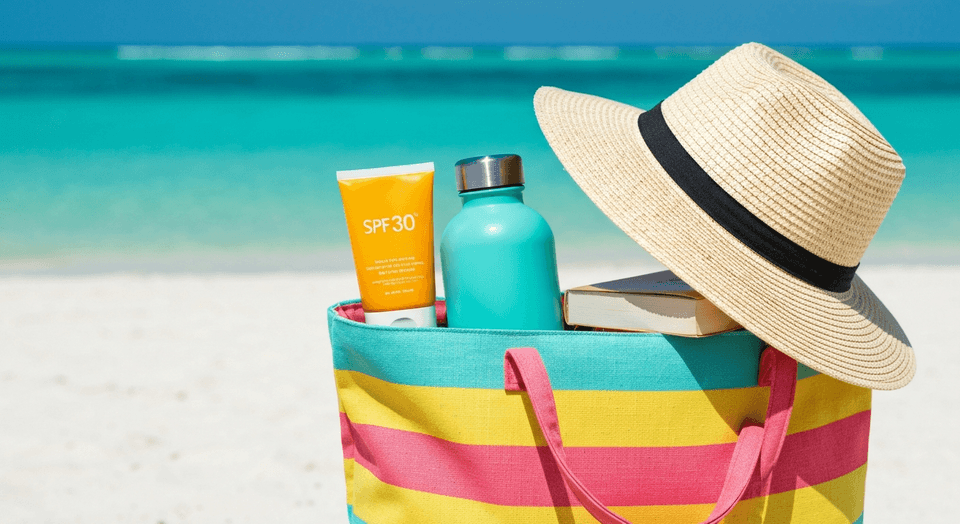
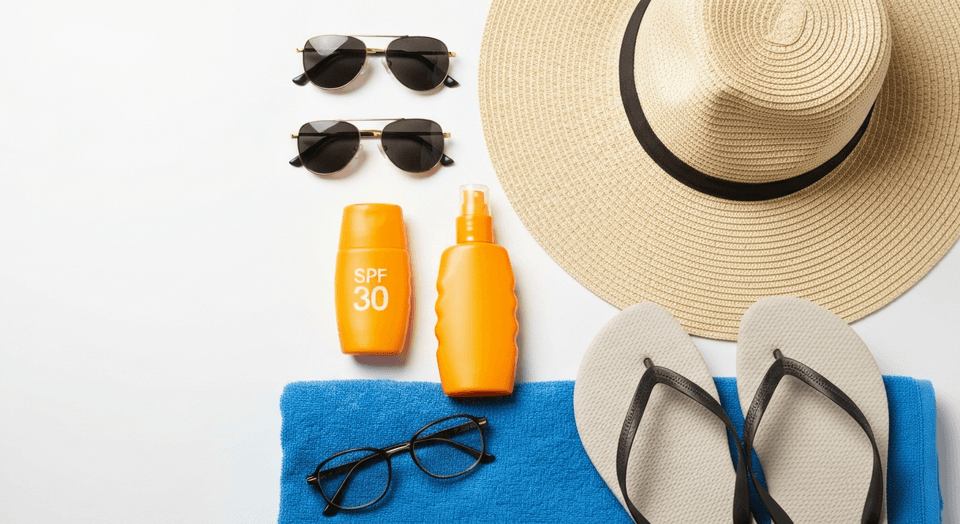
- Broad-spectrum water-resistant sunscreen
- UPF shirt or rash guard
- Brimmed hat and UV-protective sunglasses
- Refillable water bottles plus extra water in the car
- Towel or quick-dry beach blanket
- Secure shade or umbrella if the beach allows it
- Compact chair
- Waterproof phone pouch or dry bag
- Small trash bag
- Sandals or water shoes appropriate to the shoreline
- Parking payment method and offline map
This core kit handles a normal two-to-four-hour visit. A rolling wagon, large canopy and full cooler make sense only when parking, beach rules and the boardwalk support them.
Sun protection that works
Apply sunscreen before leaving the lodging so the first application is not rushed in the parking lot. Reapply according to the product label, especially after swimming and toweling.
A UPF shirt and hat reduce how much skin depends on repeated sunscreen. Sunglasses should block UVA and UVB. For young children, prioritize clothing and shade rather than expecting sunscreen alone to carry the day.
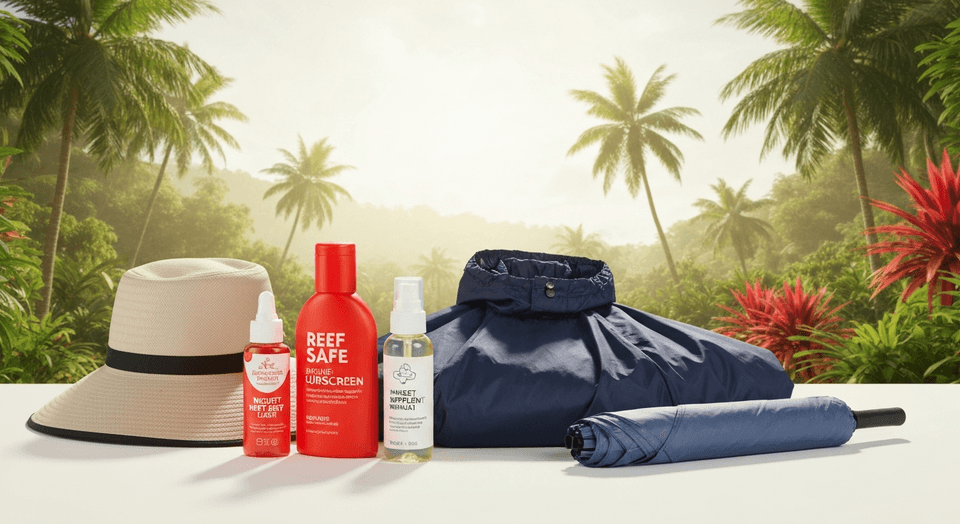
"Reef safe" is not a single regulated performance standard. Choose a product your group can use correctly and that follows local rules. Mineral formulas can be a practical choice, but consistent coverage matters most for sunburn prevention.
Shade and seating
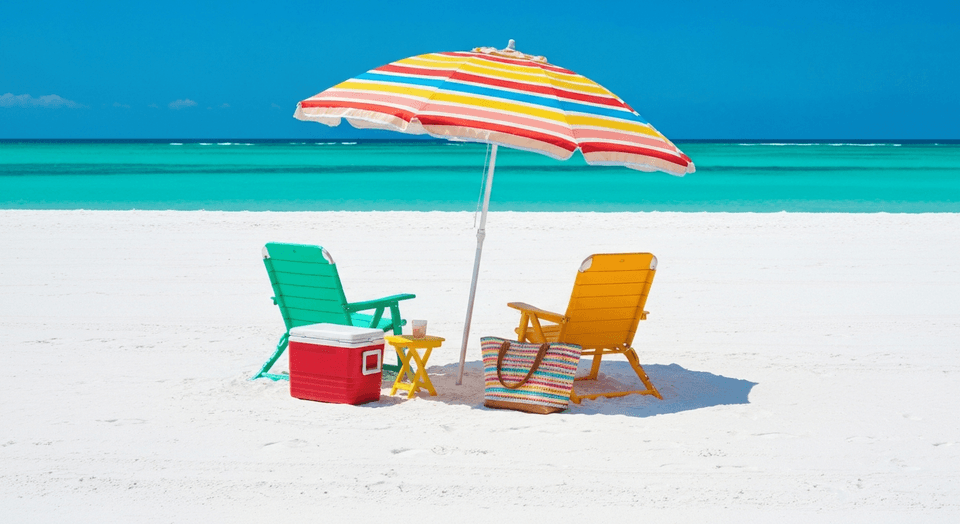
A vented beach umbrella with a real sand anchor is the most portable setup for two adults. A compact canopy can suit a family, but some beaches restrict size, staking or overnight placement. Read the named beach's rules before carrying it from the car.
Low chairs are easier to transport; higher chairs are easier for people with knee or mobility limitations. A chair with backpack straps can replace a wagon when access includes stairs or a narrow boardwalk.
Never leave shade unattended in wind. If the umbrella starts pulling, lower it immediately rather than adding weight around people.
Water, food and cooler choices
Bring more water than a mild-weather beach trip would require. Heat and humidity continue even when a Gulf breeze feels comfortable.
Use a small soft cooler for a short visit and a wheeled hard cooler only when the walk is flat and the group needs a full meal. Pack food in reusable containers, avoid glass and carry every piece of trash out. Many beaches prohibit glass containers.
Electrolytes can help after extended sweating, but they do not replace water, shade or leaving before heat illness.
Shelling gear
For Sanibel, Captiva, Venice or Englewood, add:
- Mesh shell bag
- Water shoes with a stable sole
- Small identification guide
- Hands-free pouch for phone and keys
Do not take a shell with a living animal inside. Florida rules protect live shellfish in several contexts, and local collection limits can apply. A mesh bag drains water and discourages collecting sand by accident.
For Venice shark teeth, a small scoop can help at the surf line, but it is optional. Many visitors find teeth by scanning shell beds.
Family beach kit
Children need a correctly fitted U.S. Coast Guard-approved life jacket for boating and for water situations where their swimming ability is not enough. Inflatable toys are not safety devices.
Bring simple toys, a change of clothes, snacks, child-safe sun protection and a visible family meeting point. Write a parent's phone number on a wristband for a crowded beach. Keep constant adult supervision near water, even where lifeguards are present.
Rain and lightning kit
Southwest Florida's rainy season brings frequent thunderstorms. A lightweight rain layer protects belongings on the walk back, but there is no safe beach setup during lightning.
Check National Weather Service radar before unpacking. When thunder is audible, leave the water and beach for a substantial building or hard-topped vehicle. Do not wait under an umbrella, chickee or open pavilion.
Keep dry clothes and a spare towel in the car rather than carrying them onto the sand.
Beach-specific adjustments
- Siesta Key: prioritize early arrival and a manageable walk from parking.
- Sanibel: add shelling shoes and insect repellent for calm mornings.
- Naples: travel light because many accesses have limited parking and a walk.
- Marco Island: confirm whether the resort or rental provides chairs and umbrellas.
- Venice: add shelling gear and check the 2026 renourishment area.
- Fort Myers Beach: verify the current access, parking and nearby facilities.
What to leave behind
Leave glass, speakers that disturb other visitors, oversized gear prohibited by local rules, disposable decorations, fireworks and anything likely to blow away. Do not bring a drone without checking federal, state, local and park restrictions.
Avoid buying a full snorkel setup for one turbid or rough day. Water clarity changes, and many Southwest Florida beaches are better for swimming, walking and shelling than reef-style snorkeling.
Related guides
Compare our best Southwest Florida beaches, beach-town guide, and beach gear guide.
Safety, water-quality and weather sources were checked on July 30, 2026. Individual beaches control gear and access rules.